The Timeline
Every story placed on the calendar of the war, 1941–1946.

-
 Civilian Defense & Fear
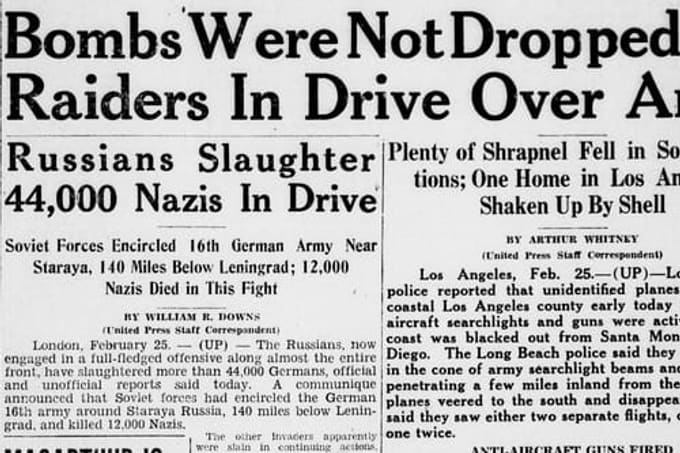
Something Like a Balloon
On the night of February 24–25, 1942, Los Angeles fired hundreds of anti-aircraft shells at the sky for an hour. The next morning the wire told the country it had beaten off waves of Japanese planes. Then the Navy said false alarm and the War Department said fifteen aircraft. The fear was real; the enemy was not.
Source · The Waterbury Democrat, February 25, 1942, p. 1 -
 Race & Injustice
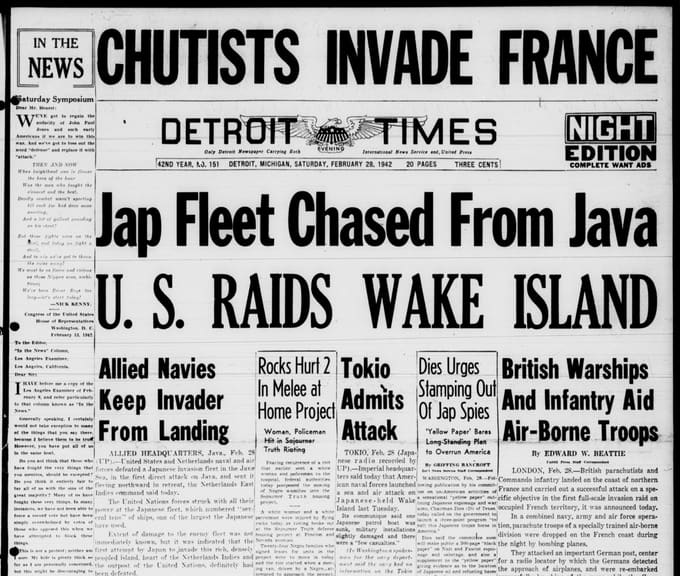
Rocks Hurt 2 in a Melee
Sixteen months before Detroit burned in the summer of 1943, a white mob stopped Black families from moving into a federal housing project. Three Detroit papers watched the same morning and could not agree on who had rioted.
Source · Detroit Evening Times, February 28, 1942, p. 1 -
 Daily Life & Culture
Seventeen Allowed to Purchase Tires
Washington's rationing rules decided who was essential enough to buy a tire — a physician, a food truck, and, after February 1942, a minister. The rules did not make tires. In two counties, unpaid neighbors sat where the widening list of the essential met the shrinking supply, and decided who got them.
Source · The Wilmington Morning Star, May 31, 1942, p. 7 -
 Industry & Innovation
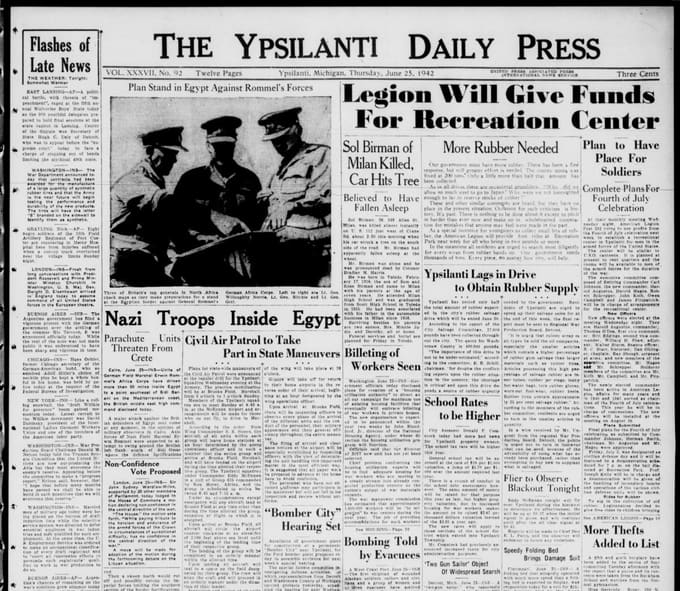
Bomber City
By 1944 the Associated Press put Willow Run's output at close to one heavy bomber every working hour. The workers came by the tens of thousands. And the town spent 1942 arguing about a city for them that the government swore it would not build — and then had to.
Source · The Ypsilanti Daily Press, June 25, 1942, p. 1 -
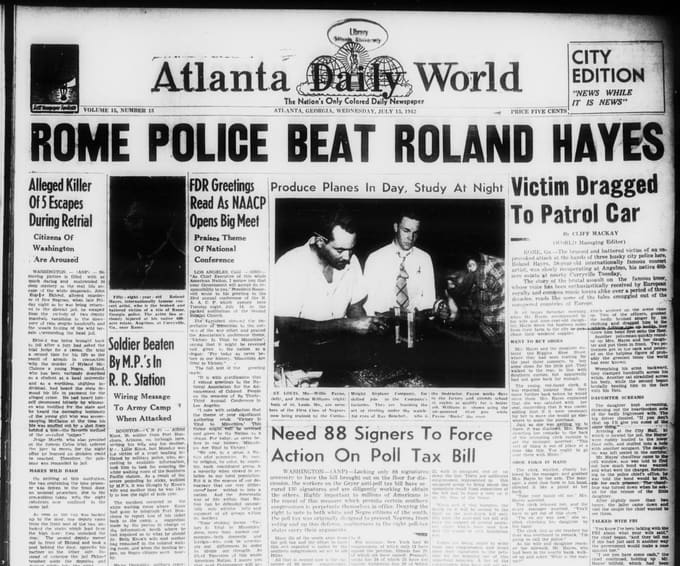 Race & Injustice
She Knew Rules
In July 1942 the tenor Roland Hayes — who had sung for the King of England — was beaten and jailed by police in Rome, Georgia, after his wife declined to move to the back of a shoe store. The American press did not ignore it. It could not agree on what it was.
Source · Atlanta Daily World, July 15, 1942, p. 1 -
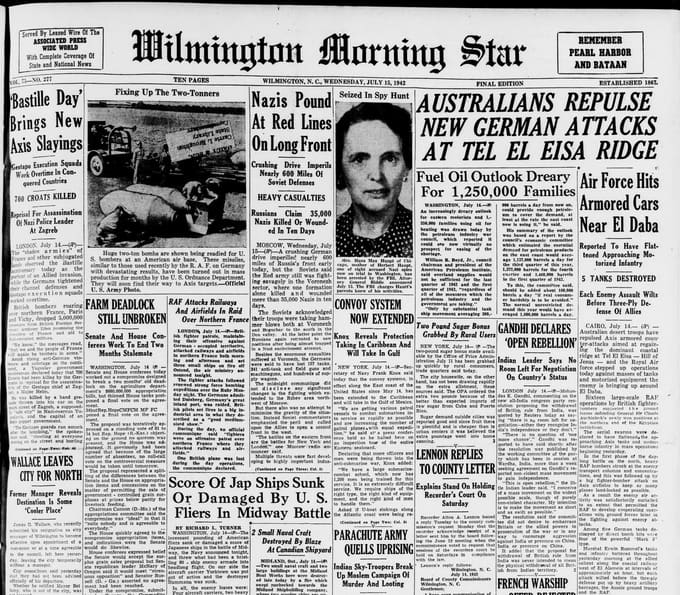 Civilian Defense & Fear
Beach Residents Now Sharing Cars
On July 15, 1942, three ships died in a battle off Cape Hatteras — two freighters and the U-boat that killed them. The front page of the nearest daily paper was about carpooling.
Source · The Wilmington Morning Star, July 15, 1942, p. 1 -
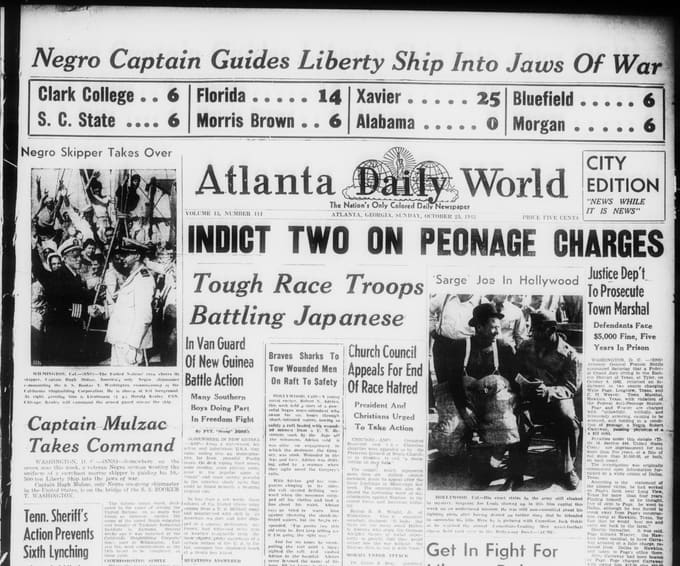 Race & Injustice
Cast Off
In September 1942 the United States launched a Liberty ship named for Booker T. Washington and gave it a Black captain. The Black press ran his own account of the twenty-four years it took. The white press ran a couple of sentences and put his race in the headline.
Source · Atlanta Daily World, October 25, 1942, p. 1 -
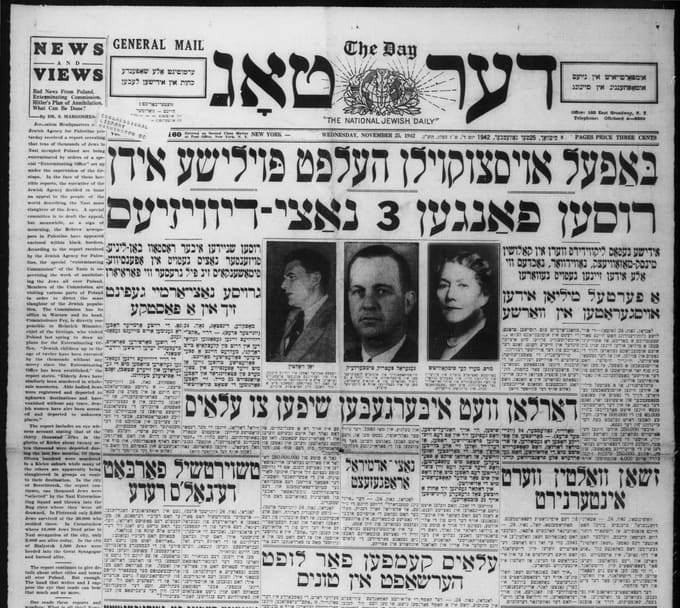 Daily Life & Culture
A Day for Mourning as Well as for Thanksgiving
In November 1942 a New York Yiddish daily printed a column in English on its front page. It said the extermination of the Jews of Europe was underway, and that it had been checked. Elsewhere the same news ran as a letter to the editor.
Source · Der Tog (The Day), November 25, 1942, p. 1 -
 Government & Propaganda
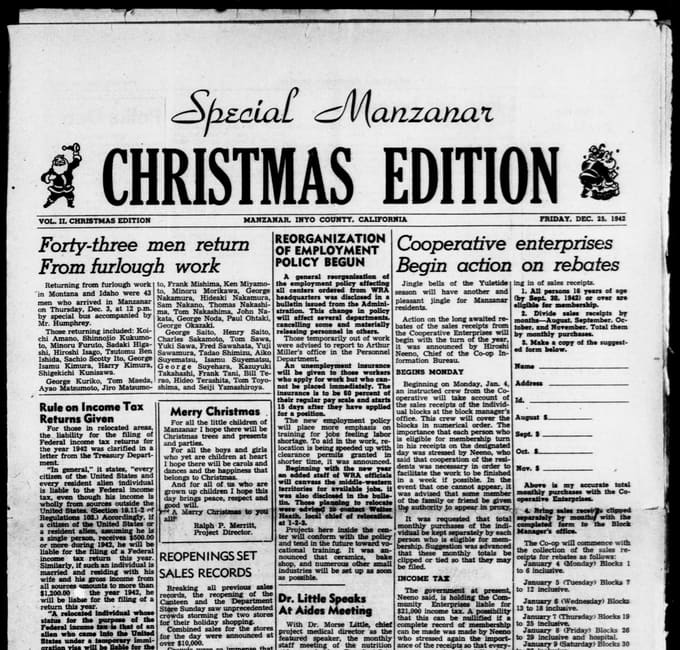
The Christmas Edition
On December 6, 1942, military police shot twelve people at Manzanar. The camp's newspaper did not publish again for twenty days, and when it did, its front page named forty-three men who had come back from a work furlough.
Source · Manzanar Free Press, December 25, 1942, p. 1


-
 Race & Injustice
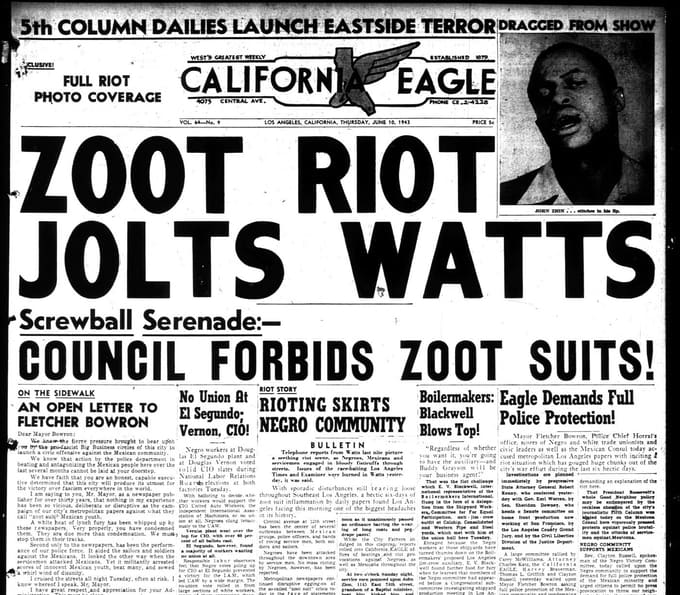
No Riot Here
In June 1943, white sailors and soldiers beat Mexican American teenagers through the streets of Los Angeles. The national wire made the beaten the aggressors. One Black weekly named the machinery it said had set the violence going — and the paper that could have spoken for the boys who were hit was nowhere the free record reaches.
Source · California Eagle, June 10, 1943, p. 1 -
 Race & Injustice
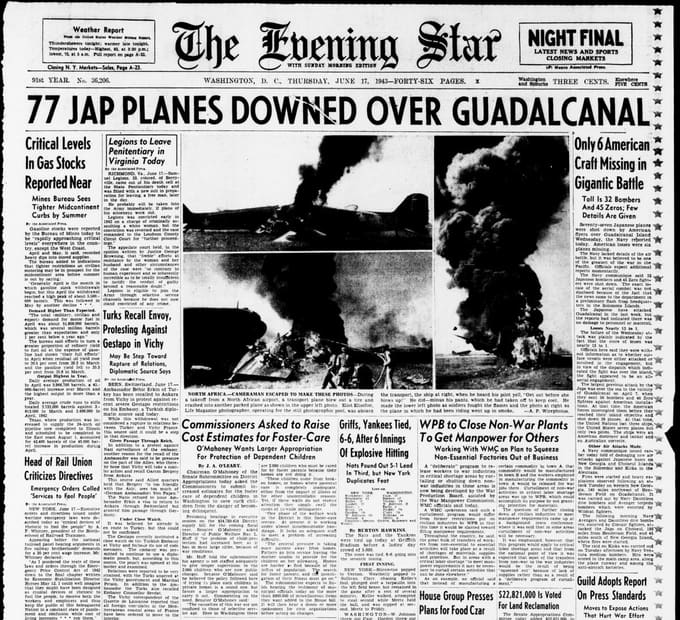
Four Papers, Four Riots
In June 1943, the same forty-eight hours in Beaumont, Texas produced four incompatible newspapers. The distance between them is the story.
Source · The Evening Star, June 17, 1943, p. 1 -
 Race & Injustice
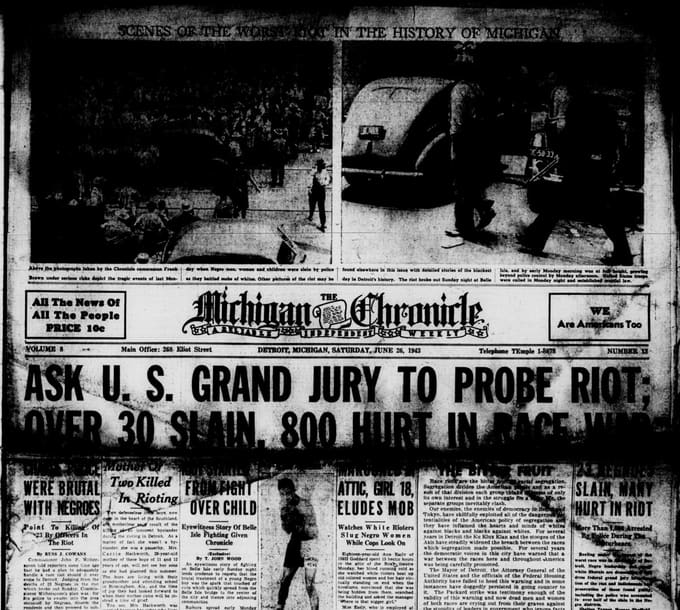
The Paper Turned to Face the Police
In June 1943, as Detroit counted its dead, the city's Black weekly did not lead with the mob. It led with the men in uniform.
Source · The Michigan Chronicle, June 26, 1943, p. 1 -
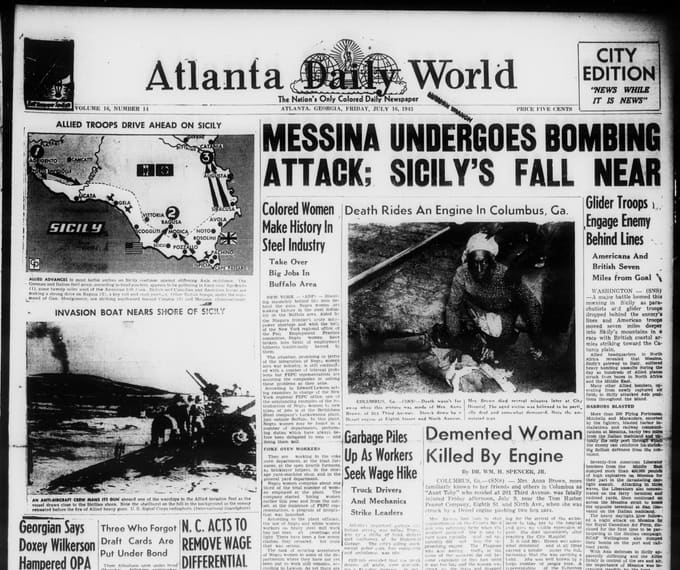 Women & Work
Six Million May Be Needed
In fifteen pages of mainstream coverage of women entering war work, Black women appear exactly once — as a hundred beds in a segregated dormitory wing. In the same months, the Black press was reporting what it took to get hired at all.
Source · Atlanta Daily World, July 16, 1943, p. 1 -
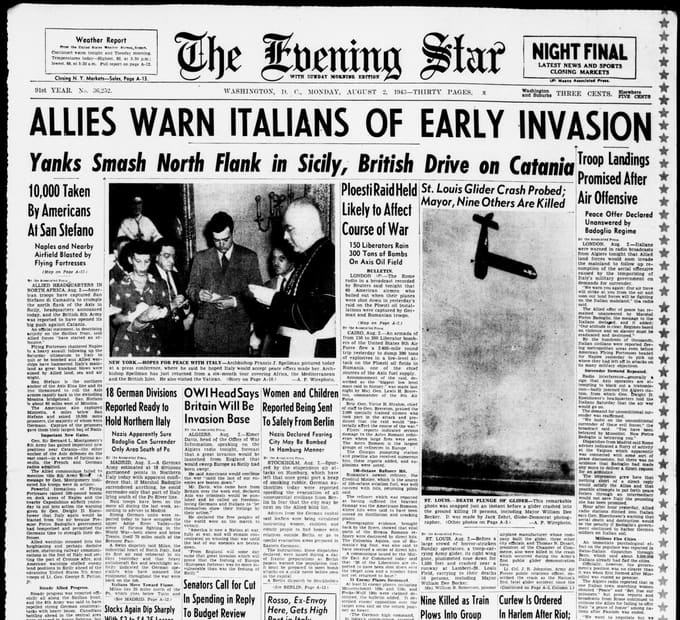 Race & Injustice
Not a Race Riot
In August 1943, a white patrolman shot a Black soldier in Harlem. Everyone agreed on what to call what followed — and no two of them meant the same thing by it.
Source · The Evening Star, August 2, 1943, p. 1 -
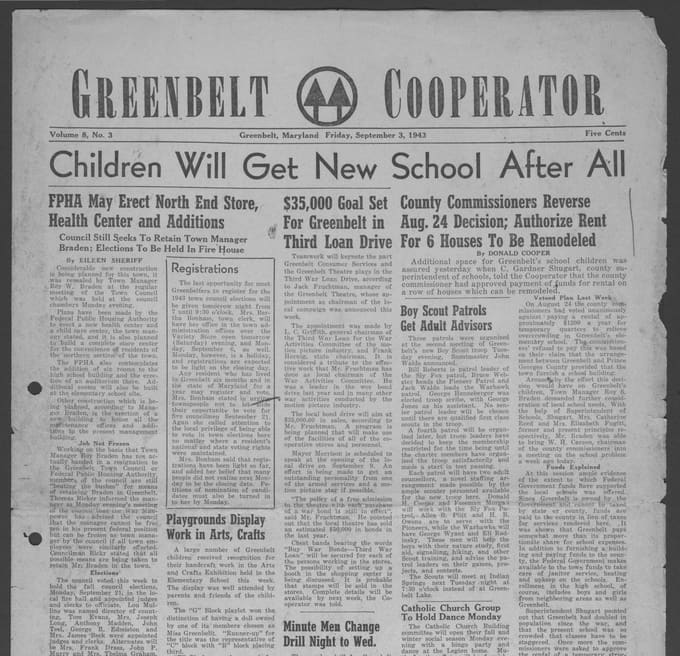 Women & Work
Community Life
The one time America ran something close to public childcare, it was never authorized as childcare. It rode in under a housing act, on a phrase broad enough to carry it and vague enough to drop it.
Source · Greenbelt Cooperator, September 3, 1943, p. 1


-
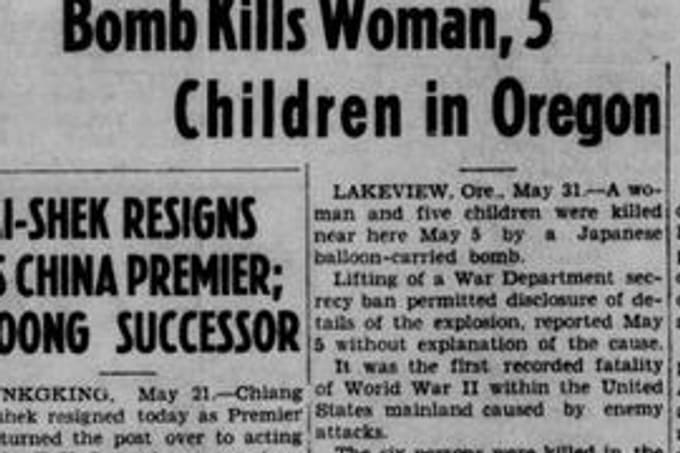 Civilian Defense & Fear
No Explanation of the Cause
On May 5, 1945, a woman and five children were killed near Bly, Oregon, by a Japanese balloon bomb. The country had not been told the balloons existed. Seventeen days later, the government lifted the ban and told it everything.
Source · The Daily Alaska Empire, May 31, 1945, p. 1 -
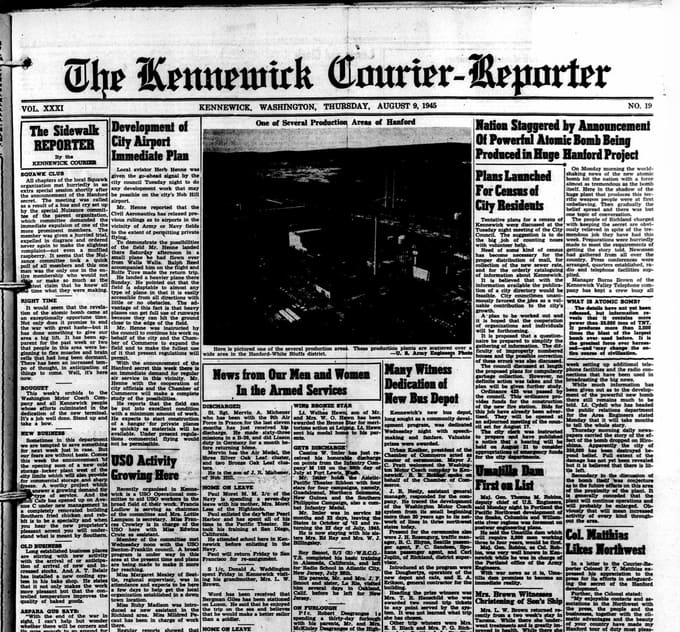 Industry & Innovation
An Exceptionally Opportune Time
For two and a half years the Kennewick Courier-Reporter covered the largest construction project in Washington State without being able to say what it was. On August 9, 1945, it found out — along with everyone else, and on the same day.
Source · The Kennewick Courier-Reporter, August 9, 1945, p. 1

