Race & Injustice
-
 Race & Injustice
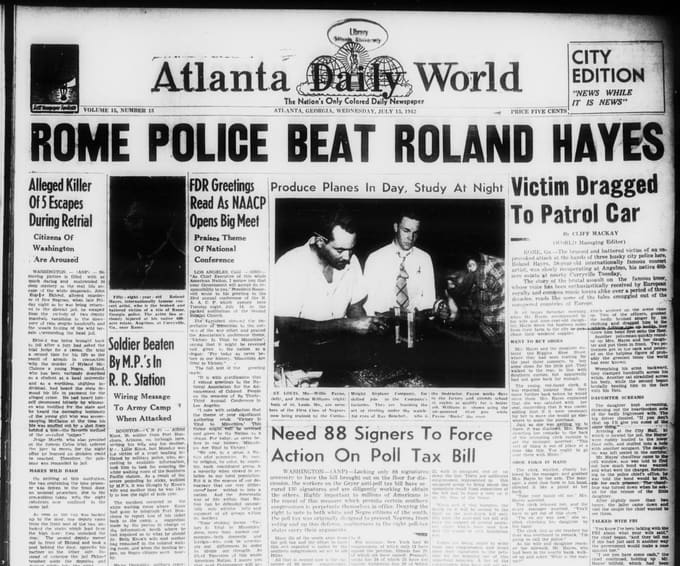
She Knew Rules
In July 1942 the tenor Roland Hayes — who had sung for the King of England — was beaten and jailed by police in Rome, Georgia, after his wife declined to move to the back of a shoe store. The American press did not ignore it. It could not agree on what it was.
Source · Atlanta Daily World, July 15, 1942, p. 1 -
 Race & Injustice
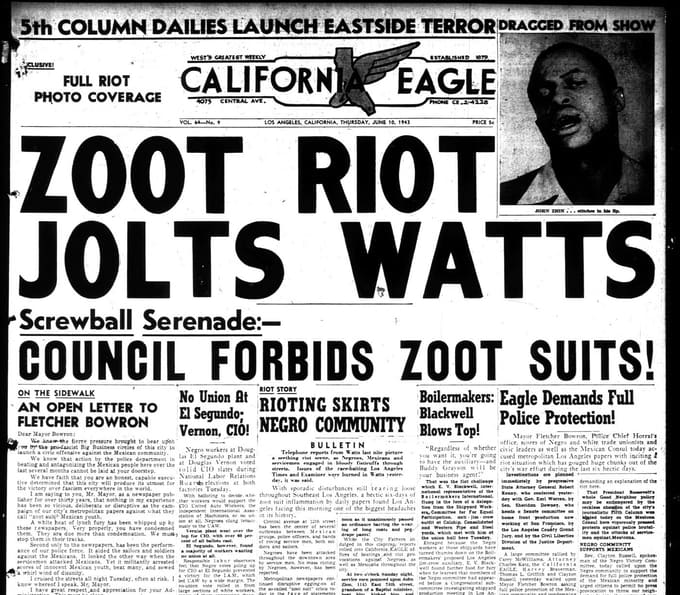
No Riot Here
In June 1943, white sailors and soldiers beat Mexican American teenagers through the streets of Los Angeles. The national wire made the beaten the aggressors. One Black weekly named the machinery it said had set the violence going — and the paper that could have spoken for the boys who were hit was nowhere the free record reaches.
Source · California Eagle, June 10, 1943, p. 1 -
 Race & Injustice
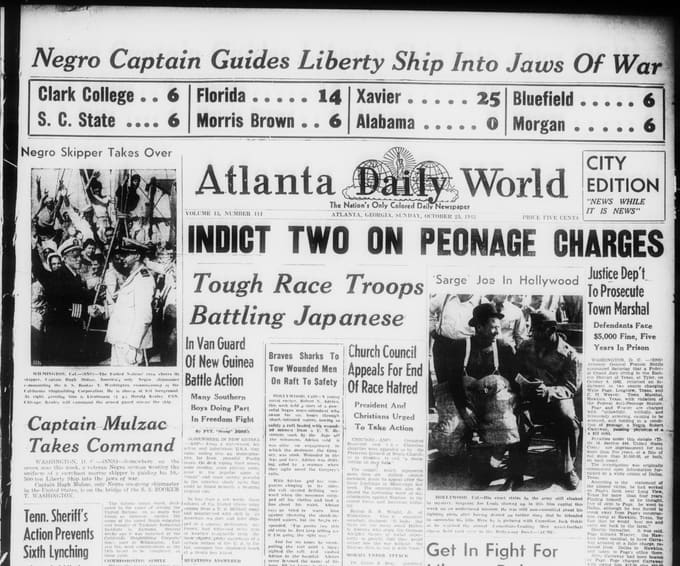
Cast Off
In September 1942 the United States launched a Liberty ship named for Booker T. Washington and gave it a Black captain. The Black press ran his own account of the twenty-four years it took. The white press ran a couple of sentences and put his race in the headline.
Source · Atlanta Daily World, October 25, 1942, p. 1 -
 Race & Injustice
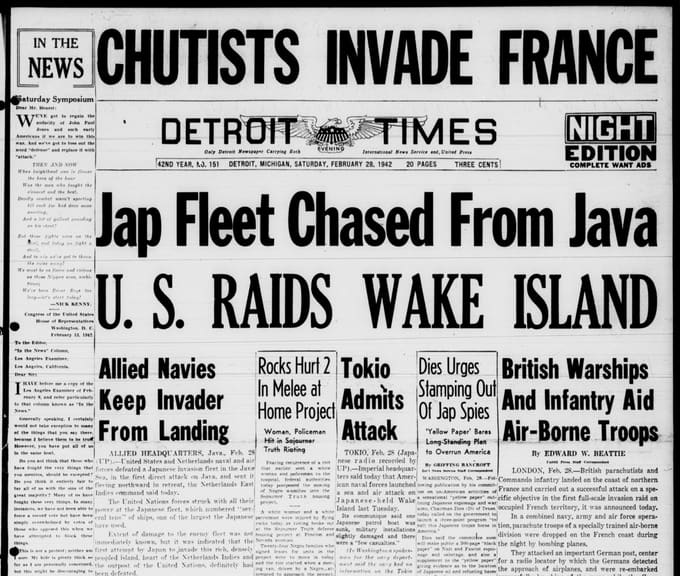
Rocks Hurt 2 in a Melee
Sixteen months before Detroit burned in the summer of 1943, a white mob stopped Black families from moving into a federal housing project. Three Detroit papers watched the same morning and could not agree on who had rioted.
Source · Detroit Evening Times, February 28, 1942, p. 1 -
 Race & Injustice
Not a Race Riot
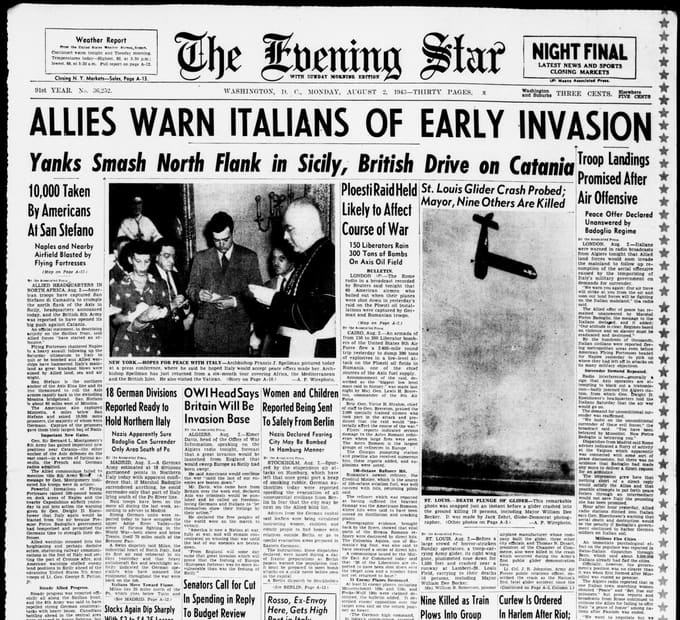
In August 1943, a white patrolman shot a Black soldier in Harlem. Everyone agreed on what to call what followed — and no two of them meant the same thing by it.
Source · The Evening Star, August 2, 1943, p. 1 -
 Race & Injustice
Four Papers, Four Riots
In June 1943, the same forty-eight hours in Beaumont, Texas produced four incompatible newspapers. The distance between them is the story.
Source · The Evening Star, June 17, 1943, p. 1 -
 Race & Injustice
The Paper Turned to Face the Police
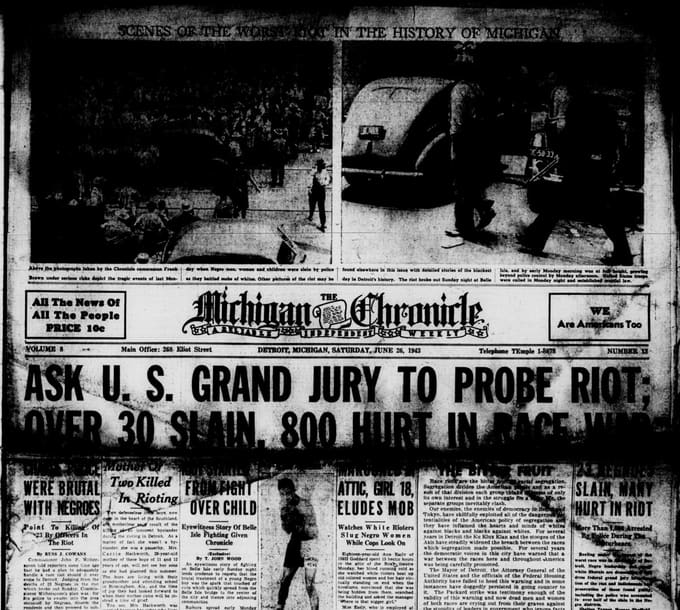
In June 1943, as Detroit counted its dead, the city's Black weekly did not lead with the mob. It led with the men in uniform.
Source · The Michigan Chronicle, June 26, 1943, p. 1


